

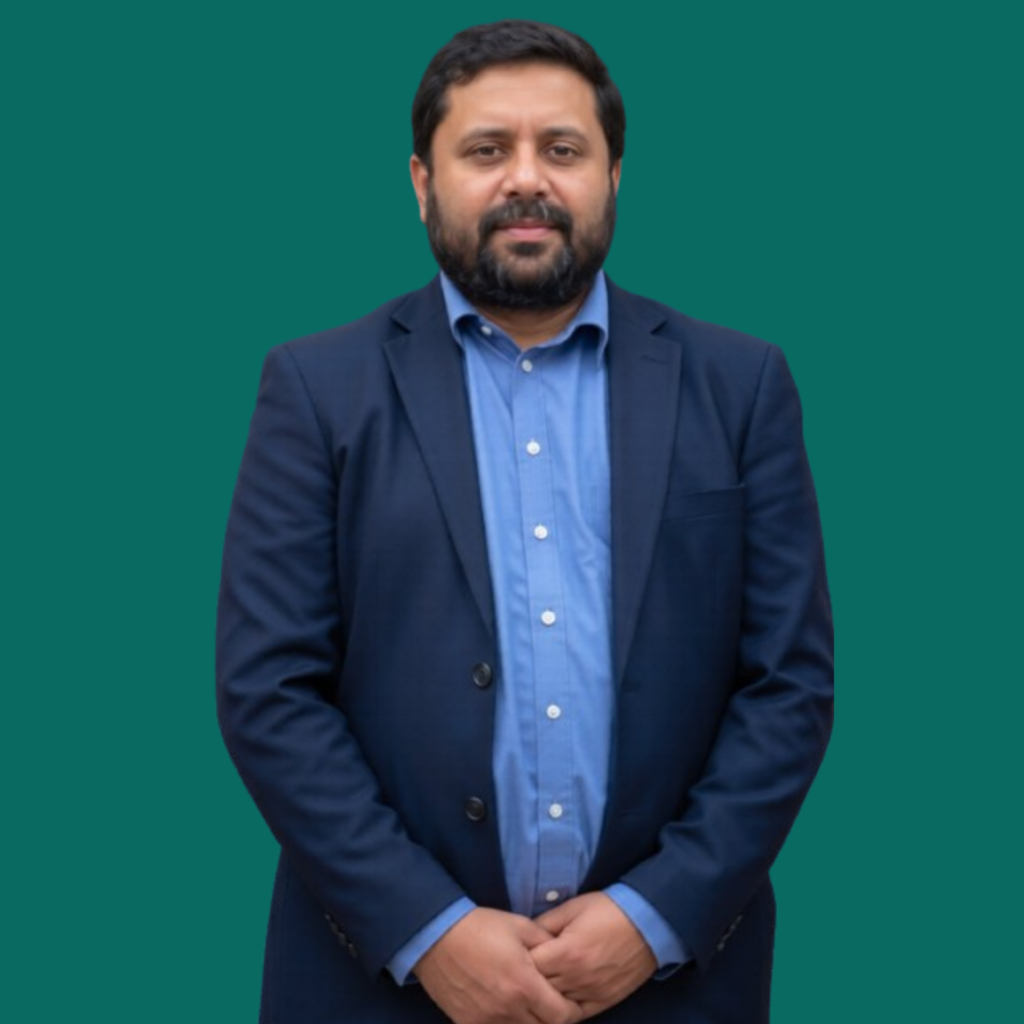
About me
Muhammad Bilal Shoaib Khan, Ph.D.
Professor of Computer Science/ Artificial Intelligence Researcher/ AI & Machine Learning Engineer
I am currently employed as a Professor in the Department of Computer Science at Green International
University Lahore. I completed my Ph.D. from the International Islamic University in Islamabad,
Pakistan, in 2007, through a scholarship awarded by the Higher Education Commission of Pakistan
under the MS Leading to PhD program. In 2010, I also obtained my M.Phil. degree from the
International Islamic University Islamabad. For my undergraduate studies, I pursued my BS degrees
at the Comsats University Islamabad Lahore Campus. Over the past 12 years, I have been actively
involved in teaching computer science and engineering courses to both graduate and undergraduate
students. During this time, I have successfully supervised more than 42 M.Phil. students. Currently, I
am mentoring 5 Ph.D. scholars and 6 M.Phil. scholars in their research pursuits.
I have made significant contributions to the field of research, having published over 55 research
articles in reputable international journals and conferences. The cumulative impact factor of my
publications stands at 75+. My research interests primarily revolve around Machine Learning, Image
Processing & Medical Diagnosis, Computational Intelligence, and Artificial Intelligence.
courses
I taught various academic and technical courses in machine learning, deep learning, and intelligent system development, including medical image analysis, disease prediction modeling, and AI-based IoT security solutions. Some Courses are listed below
Recent Trends In computing
The "Recent Trends in Computing" course covers the latest advancements in technology, focusing on areas such as quantum computing, artificial intelligence, and blockchain. It delves into the rise of cloud and edge computing, examining how these technologies reshape data storage and processing.
Advanced big data analytics
The "Advanced Big Data Analytics" course explores sophisticated techniques and tools used to analyze vast amounts of data, including machine learning, data mining, and predictive analytics. It covers topics like big data architectures, real-time processing, and advanced visualization methods, enabling students to derive actionable insights and make data-driven decisions in complex environments.
Advanced Human Computer Interaction
The "Advanced Human-Computer Interaction" course focuses on the design and evaluation of user interfaces with an emphasis on usability, accessibility, and interaction design principles. It covers advanced topics such as multimodal interfaces, cognitive ergonomics, and user experience research, preparing students to create innovative and intuitive technology solutions for diverse user needs.
Advanced Neural Networks
The "Advanced Neural Networks" course delves into deep learning techniques, covering complex architectures such as convolutional, recurrent, and generative adversarial networks. It explores advanced training methods, optimization algorithms, and real-world applications in fields like computer vision, natural language processing, and reinforcement learning, preparing students to build cutting-edge AI models.
Advanced Digital Image Procdessing
The "Advanced Digital Image Processing" course covers advanced techniques in image enhancement, restoration, and segmentation, with a focus on algorithms for real-time processing. It includes topics like feature extraction, pattern recognition, and computer vision applications, equipping students with the skills to solve complex image processing problems across various industries.
Advanced Research Methodology
The "Advanced Research Methodology" course focuses on advanced techniques in designing and conducting research, including qualitative and quantitative methods, data analysis, and experimental design. It equips students with the skills to critically evaluate research literature, apply appropriate methodologies, and effectively communicate research findings in academic and professional settings.
Probability and statistics
The "Probability and Statistics" course provides a comprehensive understanding of probability theory, statistical methods, and their real-world applications. It covers key topics such as probability distributions, hypothesis testing, regression analysis, and data modeling, equipping students with the skills to analyze and interpret data effectively in various fields.
Simulation and modelling
The "Simulation and Modeling" course focuses on the principles and techniques used to create mathematical models and simulations of real-world systems. It covers topics like system dynamics, Monte Carlo simulations, discrete-event modeling, and optimization, providing students with the tools to analyze complex systems and predict outcomes in various domains.
Advanced Algorithm Analysis
The "Advanced Algorithm Analysis" course delves into the theory and techniques for analyzing the efficiency of complex algorithms. It covers topics such as asymptotic analysis, NP-completeness, approximation algorithms, and advanced data structures, equipping students with the skills to design and optimize algorithms for real-world applications.
Advanced theory of computation
The "Advanced Theory of Computation" course explores the foundational concepts of computation, focusing on formal languages, automata theory, and complexity theory. It covers advanced topics like Turing machines, decidability, computational hardness, and the classification of problems, providing students with a deep understanding of the limits and capabilities of computation.
Computer architecture and assembly language
The "Computer Architecture and Assembly Language" course focuses on the structure and functioning of computer systems, including processors, memory, and input/output mechanisms. It covers low-level programming in assembly language, instruction sets, and system optimization techniques, equipping students with a solid understanding of how hardware and software interact at the machine level.
Data mining
The "Data Mining" course covers the techniques and algorithms used to discover patterns and extract valuable insights from large datasets. Topics include classification, clustering, association rule mining, and anomaly detection, providing students with the skills to apply data mining methods in various domains like business, healthcare, and finance.
My services
I provide academic and technical expertise in machine learning, deep learning, and intelligent system development, including medical image analysis, disease prediction modeling, and AI-based IoT security solutions. My services also include research guidance, model development, data analysis, and implementation of explainable AI techniques for reliable real-world applications.
01.
Machine Learning & Deep Learning Solutions
Development of customized machine learning and deep learning models for classification, prediction, and pattern recognition across healthcare, IoT, and intelligent system applications.
02.
Medical Image Analysis Systems
Design and implementation of AI-based medical imaging solutions for automated disease detection and diagnosis from MRI, CT, and clinical image datasets.
03.
Disease Prediction & Healthcare AI
Creation of predictive analytics models to support early diagnosis and risk assessment of medical conditions using structured clinical and biomedical data.
04.
Explainable AI & Model Interpretation
Integration of explainable AI techniques such as SHAP, LIME, and Grad-CAM to improve transparency, reliability, and decision support in AI-driven systems.
05.
Intelligent IoT & Cybersecurity Modeling
Development of AI-enabled intrusion detection and anomaly detection frameworks for secure and efficient IoT and smart network environments.
06.
Research Guidance & AI Consulting
Provision of academic supervision, research methodology support, and AI solution consulting for students, researchers, and organizations working on intelligent technologies.
About Me
I am a Professor of Computer Science and an HEC-approved PhD supervisor with extensive experience in machine learning, deep learning, and computational intelligence. My research focuses on medical image analysis, disease prediction, explainable AI, and intelligent IoT systems, with over 55 international publications and supervision of 40+ postgraduate researchers. I am committed to developing reliable AI solutions that bridge academic research and real-world healthcare and smart technology applications.
People Talk About Me
“Dr. Bilal’s expertise in AI and deep learning is remarkable; his guidance on research projects has always been insightful and transformative.”
Dr. Muhammad Adnan Khan
Assistant Professor, Gachon University, Korea
“He is a visionary researcher and educator who consistently bridges theory with practical applications in medical AI and intelligent systems.”
Dr. Sagheer Abbass
Professor, Prince Muhammad bin Fahad University, KSA
“Working under Dr. Bilal’s supervision was a game-changer; his mentorship helped me achieve research excellence and real-world problem-solving skills.”